

Nuremberg (2025), Archives, and Nuremberg’s Psychiatrist
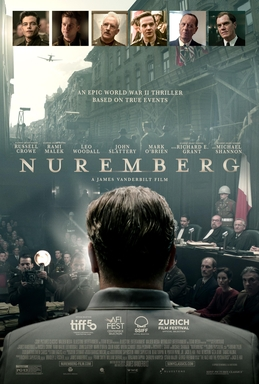
Yesterday I watched Nuremberg (2025), the new film based on Jack El-Hai’s book about the complicated relationship between Hermann Göring and his psychiatrist, Dr. Douglas Kelley, during the Nuremberg Trials. I’m not writing a review — but the story opens an important path for anyone interested in the real historical record behind the characters.
This year marks the 80th anniversary of the Nuremberg Trials, a moment that reshaped international law and established the foundation for how the world understands crimes against humanity. Against that backdrop, the film’s archival choices feel especially resonant.
📜 The Now-Digitized Nuremberg Trial Documents
Just this year, Harvard’s Nuremberg Trials Project released its fully digitized, searchable collection of trial documents. It includes:
- indictments
- psychiatric evaluations
- interrogations
- handwritten notes
- prosecution and defense materials
It’s a remarkably rich primary-source archive, accessible to the public for the first time at this scale.
https://nuremberg.law.harvard.edu
🎥 The Film’s Use of Archival Footage
Without venturing into a review, I applaud the film for its decision to place the original camp liberation footage at its center.
These harrowing images remain among the most important visual records we have: documented by Allied camera units as evidence, and preserved so they could never be denied, forgotten, or rewritten.
In a moment of rising antisemitism worldwide, the visibility of that footage feels not only historically essential but morally urgent.
📺 Douglas Kelley: On Film & In the Archive
Following the role he played in the trials, Kelley created a television series for KQED in the late 1950s called The Criminal Man. In the series, he explored the psychology of criminal behavior, public morality, and what society defines as “normal” and “abnormal” minds.
These broadcasts survive today and are freely available through the American Archive of Public Broadcasting — a rare opportunity to watch Kelley in his own words. For anyone who sees Rami Malek’s performance in the film and wants to understand the real, historical Kelley beyond dramatization, this material is extraordinary. You can see more of the series here.
Why This Matters for Storytelling
Films like Nuremberg remind us that archives shape not only how we understand the past, but how we construct narratives about the present. The stories we tell — and the evidence behind them — continue to matter, especially 80 years later.